Saturday, February 19, 2011

Yebo!

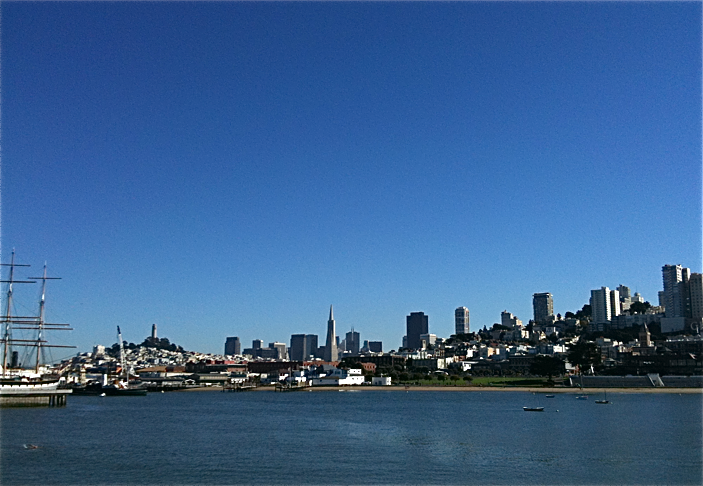
Ahhh, yes...February in San Francisco.

The Bay Area is blessed with lovely weather, but in my humble opinion the month of Groundhog Day and Valentine's Day and Presidents Day and my birthday is often one of the finest of the year (October is up there, too). Maybe it's simply because the end of winter looms a bit closer on the calendar; maybe it's the wild, unpredictable, changeable climate. Sure it can rain, and yes it can be dreary and cold, but February can also dish up weeks of bright blue skies, temperatures in the upper 60's or even 70's, deliciously nonexistent wind and calm, starry, moon-lit nights. The storms, when they do roar in from the Pacific, seem different than those in December and January, more like the ones back east, with a taste of spring in their fury: towering, puffy white clouds, buckets of rain and then none, blustery blue breaks in-between, hail one minute and rainbows the next. Toward the end of the month the golden hills of the Golden State burst green again, the first tentative Footsteps of Spring emerge in the grassy hills of the Marin Headlands, and the sun continues its march higher and higher in the sky.

Six years ago I spent most of February preparing for a two-week trip to Africa. South Africa to be specific. A wine related junket to Cape Town and the adjacent grape-growing regions of Stellenbosch, Paarl and Franschhoek to be exact.

Quite frankly, I was beyond excited; more like totally freaked out. C'mon, now...Africa! In my wildest dreams I never thought I'd get there. And the trip began on my birthday, to boot. Bright and early on February 25th we flew from San Francisco to Atlanta, checked into a hotel, met up with eleven other wine folk from around the US of A, then hit the town for a raucous evening of margaritas, Spanish wine and tapas at a restaurant/club in the Buckhead District. The next day we roused our weary, hung-over butts and hopped on a plane for 20 hours.

Yup, it takes a while to get there. Which is one of my reasons for sharing this post, one of the things I so learned from the trip. I came back lamenting the fact that we Americans are missing out (especially we on the West Coast). Everyone should go to Cape Town, to Africa. It feels like a pilgrimage, a return to the place humans first began (which is the cool, spiritual part), but it's so damn far away (which is the tedious, reality part). Europe has it easier; they can jet down from London or Paris or Frankfurt in 12 or so hours. But from the States the flight to Cape Town is gruesome, no doubt about it. And coming back is even longer.

Cape Town, with Table Mountain behind

I'm still not sure what I expected to find, but the modern and bustling city of Cape Town was a huge surprise. Restaurants, bars, shopping malls, hotels, buses, taxis, a financial district, ferry service, movie theaters, tree-lined neighborhoods, city parks, traffic jams, skyscrapers, banks...hell, even paved streets: it was all there! (Like I said, I had no idea.) The coast south of the city proper boasts oceanside settlements not unlike Santa Cruz, with open air cafes, art galleries and tacky souvenir shops; sandy beaches for relaxing, sunbathing, surfing or volleyball, and turquoise-blue, slightly chilly but swimmable water. To the north and east a smattering of quaint, historic wine towns dot the landscape, and amenities for local and international tourists abound.

I didn't expect this either.
A colony of penguins on Boulders Beach

The food scene was also somewhat of a revelation. Before takeoff I had, of course, spent some hours online, diligently scanning the various US Government websites for state advisories when visiting South Africa. I read the usual warnings about traveling with money and staying safe, about drinking tap water and exercising caution when eating fresh fruits and vegetables, meat and seafood.

I followed none of the advice.

The first ten days of winery visits and tastings and seminars and luncheons and vineyard walks and dinners were, of course, extraordinary. Eye-opening: The people, the sights, the 400-year wine making history. And taxing: Up early, to bed late, with lots of travel, food and drink in between. I intended to be careful, watch what I ate, and I intended to be sensible, not drink too much. Alas, the road to hell is paved with good intentions. After our first full day in South Africa the group attended a little shindig in the town of Franschhoek hosted by Boekenhootskloof Winery (I know...the names!). The restaurant was small, hip and clean: my first shock of the evening (Wow, they even have cool restaurants, just like in America). The second shock was the tasting menu specially prepared for our table by the chef: it began with raw oysters on the half shell from Namibia. Yeah, Namibia.

I'm not a huge fan of raw oysters, even here in good old and supposedly FDA-regulated California. I eat them a couple times a year—and when I do, enjoy them—but they have to come from an established, familiar source. Needless to say the country of Namibia is not one.

In my head I anxiously debated back and forth what to do, all the while carrying on scintillating conversation with my hosts and table-mates until that first course was delivered. From the plate an icy arrangement of six innocuous-looking, freshly-shucked bivalves met my gaze, but in my mind's eye I saw only six possible trips to the closest emergency room. My fellow diners dove in. I paused. Then I slurped 'em up and washed 'em down with a white Boekenhootskloof semillon (delicious).

For the remainder of the trip I feasted on apples, peaches, nectarines, grapes, fresh salads, sashimi, ceviche, sausages and roasts of impala (an antelope), carpaccio of filet of beef, kudu jerky (another antelope), local goat and cow's milk cheese, ice cream. In an attempt to stay hydrated, gallons of water guzzled from bottles or straight from the tap followed all the food. As did my malaria pills.

Malaria is not really a threat in the city of Cape Town, but in the wilds of South Africa new cases and the ancient, devastating sickness still abound. Which brings me to this: I knew that if I was gonna fly all the way to Africa, to South Africa, then there was no way in hell I was gonna return to San Francisco without a safari under my belt. And to take a safari, you gotta get into the wild.

Two months in advance I emailed the sommeliers and wine buyers on the list of attendees, but no one save a gent named Neil Doerr, a retail wine buyer from Oakland, thought they wanted or could get the extended time off. I did the research, I priced the options (lots, and all expensive), I decided on the game reserve, and when the wine trip ended with a flight from Cape Town to Johannesburg (from there back to Atlanta, etc.), we bid our goodbyes to the rest of the group and caught a different plane to the northeast corner of South Africa, to Mpumalanga Province, to the unknown.

*  *  *  *  *

Lucky


On the wall behind Teddy the barman, surrounded by an impressive collection of old trophy heads and black and white photographs from an earlier era, hangs a pair of chalk scoreboards printed with an extensive roster of animal names. There’s the coveted Big Five, of course: lion, leopard, elephant, white rhinoceros and Cape buffalo.  Hyena, warthog and wildebeest are listed with monitor lizard and marabou stork. A herd of graceful antelope is included, their names echoing the exotic rhythm of native speech: bushbok, duiker, impala, klipspringer, kudu, nyala, waterbok. Burchell’s zebra and giraffe and hippopotamus, banded mongoose and cheetah and Vervet monkey: each animal is ranked with a point value based on populations in the area and rarity of sighting. Five or ten points for the more common inhabitants of the area, fifty or seventy-five points for those creatures in the middle range, and into the low hundreds’ for the shyest, most secretive of species. At the end of the day, after the morning and evening game drives have concluded, after all the guests and rangers are safely relaxing and reliving their adventures in the bush, the individual scores for everything seen are entered into their respective boxes, then the numbers are totaled. The collective high score to beat from perhaps days or weeks ago is written on top until it is surpassed, and way down in the lower right-hand corner, with a maximum point value of 200, is a little box reserved for what is fondly known as The Kill.

On my second night in camp—after remaining empty for over four months, we learn—I watch as one of our young and able-bodied rangers walks behind the bar and fills in the space. 200 great big points. Compared to the previous evening the atmosphere in Teddy’s well-appointed lounge is electric, the sense of excitement and adventure palpable. The small, clubby space is crowded with people perched on leopard print bar stools and leather armchairs, sipping gin and bitter lemon or local ale. Everyone is happily sharing stories and comparing sightings, a handful of them still shocked by the evening’s unexpected turn of events. Outside the bar, in the pitch-black, star-studded night surrounding the lodge, a symphony of frogs and other nocturnal music vies with the noisy revelry inside…and there’s one less impala trying to survive until the morning.

Welcome to Mala Mala Game Reserve: Mpumalanga Province, South Africa.


Situation normal for the summer rainy season, sunrise on the deck overlooking the ochre-colored Sand River was already balmy. At a quarter to six we were clad in shorts and lightweight pants and t-shirts, with cameras, hats and sunscreen ready, downing a harried cup of coffee and a piece of fruit before setting out into the lowveld. By eight o’clock it was even warmer, sticky, windless except for that caused by the movement of the Land Rover as it snaked through the reserve in search of game. Then the sun climbed above the tallest of the acacia trees and the temperature soared near triple digits. By the time the various groups returned to camp for a hearty breakfast it was just plain hot. Africa hot.

Nine hours later, halfway through the evening drive and miles from the lodge, my four jeep mates and I, plus Jaime our ranger and Johan our local Shangaan tracker, piled out of the Land Rover. Jaime set up a small cloth-covered table, opened a bottle of Mulderbosch sauvignon blanc, and there we were, impossibly sipping wine and nibbling bite-sized sausages as the African sun dipped below the horizon and the oppressive heat finally eased. Johan had secretly pulled the warm pot of crispy meats from somewhere, from under the hood of the Land Rover, he said. He smiled though, a mischievous twinkle in his eye, and I heard Jaime chuckling softly behind me so I guessed I was being duped. However he cooked them, wherever he warmed them up, they hit the spot, as did the wine. But let’s face it, at that point anything would have. I was as happy as a warthog in shit. We all were, so pleased by the extraordinary expanse of land, amazed by the ease with which we checked off animals in our official Mala Mala sighting booklet.

Enjoying our “sundowners” in the middle of a small clearing we stood for the first time outside the game lodge proper on terra firma. As we were quickly discovering, the terrain was an imposing, thorny, dangerous mix of tall grasses and scrub, low trees and sandy paths, all of it dotted with dark muddy wallows where rhino or buffalo possibly cooled off during the day. Johan stood quietly at the back of the Land Rover and kept his keen vision trained on the surrounding perimeter of trees; and Jamie reminded us to climb back on board should any big game unexpectedly show up. Shortly after the sunset, after some group photos and toasting and more snacks and lively banter, we were on the move again, on the prowl. From the back seat Johan held a large spotlight, scanning the bush for the glint of animal eyes, and we were peacefully cruising through the pleasant night to an unexpected encounter with death.

During the morning game drive one of our groups had spotted a pride of lions hunkering down for the long, hot afternoon. Another party of explorers found them in the same place as the sun sank, as they started to rouse for the evening. Slowly, patiently, they followed the lions from behind, delighted with the chance to observe their movement and behavior. Via radio the ranger notified his comrades in the bush, thus news of the find, and its location, was quietly relayed to the other vehicles: an opportunity for those nearby to hurry over and share in the choice discovery. Unbeknownst to any of us Jaime knew about the lion sighting, so after we sipped wine and chatted leisurely on the ground he packed us up in the Land Rover and quickly headed in the direction of the pride.

Unlike the previous night’s outing we were definitely making a beeline for...someplace? Secretly I wondered why we were travelling so swiftly. A bit disappointed, I thought perhaps we were heading back to the lodge early. Not yet, I silently wished. Please, not yet. Soon the headlights of two other Land Rovers peeked through the trees, and I assumed that maybe everyone was through for the night, sure that our nocturnal search for animals had come to an end. Jaime, however, knew that we had found the vehicles tracking the pride, and that between us the lions walked somewhere, unseen. Then suddenly, without any notice, the cats scared up a lone impala and immediately took off in pursuit. Still in contact with the other rangers Jaime heard what was happening on his headset; he knew that we were very close, so he shut off the motor to listen for the lions and any possible struggle. Well he must have heard one, because he quickly revved up the engine again and drove straight off-road, straight into the blackness, and straight toward the commotion.


Moments later we stared in horror as the other Land Rovers softly motored up and pointed their spotlights on a truly grizzly scene. The pride had quickly brought down the unfortunate impala, and there in the grass maybe fifteen feet away they naturally, eagerly, noisily, devoured it. Bones cracked, the adult lions growled at each other as strips of warm flesh were torn off, and youngsters muscled in for their share. It was fantastic. I had seen similar footage on TV, on the Discovery Channel or Animal Planet, but unlike that armchair travel the heavy, unmistakable scent of blood hung in the thick, humid air. Unlike the safety of my apartment back in San Francisco we watched the whole thing live, and from a convertible: no doors on the Land Rover, no roof, and no glass separating us from the top of the African food chain. Twenty minutes later the feast was over. One by one the lions licked their bloody chops and sluggishly, mysteriously, faded into the night.

Four vehicles had made it over in time to witness The Kill, and thanks to our crackpot ranger our bunch was the first on the scene. I found myself wondering if lions ever act like sharks during a feeding frenzy, if whipped into a flurry by the taste of fresh meat anything, and everything, nearby becomes fair game. With a few short leaps the lions could have easily attacked, but during the massacre Jaime never once reached for the rifle on the hood of the Land Rover. As Neil and I swore in disbelief from the back seat he calmly and scientifically explained the nightmarish spectacle, our own personal play-by-play narration. They’re nuts, I thought to myself; they’re really good at what they do, but these rangers are bloody nuts! Like predators themselves they work in unison, expertly honing in on animals, tracking them as if on the hunt, alerting each other of prize sightings. But unlike days past when human killers paid big bucks for the thrill of shooting big game the end result is observation, not slaughter.

Still amazed and, honestly, somewhat shaken by the gory rendezvous we left the scene of the crime and turned toward home, pausing briefly on the bridge leading us back to camp. In the middle of the span Jaime shut off the engine, the headlights, and we were plunged into darkness. High above the Sand River the Milky Way soared across the Southern Hemisphere sky. Unseen but definitely heard a multitude of crickets and frogs bombarded the ebon void surrounding us with their incessant chirping. Through the noise I thought I heard the tall grass by the river rustle ever so softly. My skin crawled, a shiver of adrenaline shot up my spine, and my scalp tingled in alarm. Somewhere out there more predators lurked. I looked up toward the beautiful swath of stars to divert from my mind the image of being eaten alive. If he made me get out now and walk the short path back to the lodge, I quietly voiced to Neil, I would keel over in terror before anything got me. In minutes I would die from fright alone.


Mala Mala is the largest privately owned game reserve in South Africa: almost 35,000 prime acres of land with thirteen miles of riverfront. The sanctuary is known as a champion for wildlife preservation and environmental research in the area, instrumental in the removal of barriers that once used to separate it, and other properties, from Kruger National Park, the 8000-square mile natural jewel east of the reserve. For my brief two-day stay I quickly learned why it’s also considered one of the finest safari destinations in the world. From beginning to end the combination of luxury, the attention to detail, and the game-viewing expertise was first rate. After an hour flight from Johannesburg our anxious band of travelers was met at a tiny airstrip in the middle of nowhere, efficiently whisked away to camp, and immediately waited on hand and foot. As guests we were pampered with spacious and beautifully appointed insect-proof lodging, served three delicious meals a day, and educated on the flora and fauna of the South African lowveld by obviously well-trained, dedicated professionals. Amenities included an outdoor swimming pool, filtered water in the taps and bottled water in the rooms, a library full of books and videos on animals and nature, The Buffalo Lounge, a gift shop, spa, and Teddy’s very popular and well-stocked bar.

On arrival my traveling companion Neil and I, along with Charlotte, Iris, and Stephanie, were assigned to Jaime Naylor, and for the duration of our safari he became our all in one go-to guy, our personal Man Friday. Part valet and part waiter, part ranger and part natural history professor, Jaime attended to our every need in camp: issuing wake up calls in the morning, taking orders and organizing drinks at mealtime, answering questions and facilitating any special requests. Twice a day, he and Johan lead us into the undulating tangle of trees, riverside thicket, and open savanna surrounding the lodge. Together they made a topnotch team, expertly sharing their intimate knowledge of the land and their love of wildlife big and small. The three-hour game drives were without question the highlight of the day, but an optional hike into the bush with two armed rangers offered a different perspective of the lowveld. The leisurely (and, at midday, scorching) stroll allowed for a more intimate inspection of plant and animal life, a chance to find dung beetles diligently re-sculpting fresh elephant patties, to sample indigenous fruit or leaves used in regional cuisine and medicine. Catering to a maximum of only thirty-six guests at a time the whole experience was extremely personal, impeccably orchestrated, and very tasteful: all due to an incredible staff and to Michael and Norma Rattray, the well-respected conservationists and owners of Mala Mala since 1965.


Forty-eight hours turned out to be plenty of time to track down Africa’s Big Five, plus have a host of other fascinating encounters. A languorous herd of giraffe at dusk, an eye-popping display of zebra and a handsome little leopard tortoise by the side of the road, a kaleidoscope of colorful bird life: surprise discoveries waited everywhere. For two days I remained astonished, thinking to myself how crazy it all was, how close our Land Rovers came to obviously wild animals, how close they came to us!

Overall it seemed most of them could have cared less. Sure, an enormous bull elephant became a bit perturbed when we rounded the bend and slowed down, but it was still very early in the morning and we probably just took him by surprise. Impressively the gigantic beast flared his ears and shook his head, trumpeted loudly in our direction, and then calmly resumed eating. And the rhinoceros’ on both occasions (once a pair of adults and a juvenile, once a lone male) were a tad under-whelmed by our presence, slowly ambling further into the bush as we followed. Hippos, quite frankly, didn’t want anything to do with us but stayed put in spite of the nuisance; they simply turned their generous rumps our way and tried to look invisible. But none of the big cats we met on the game drives (lion prides on two occasions and single leopards on all four) paid much, if any, attention to us. They went about their business as if we weren’t even there: expertly climbing trees or sniffing out the scent left by potential prey, potently marking their territory, scaring up birds hiding in the grass, and, of course, devouring impala. It was all very strange. The rangers explained that in the forty years since Mala Mala became a game reserve many of the animals have learned not to be bothered by the Land Rovers with the people inside. We were instructed early on, however, and instructed often, not to exit the vehicle or even stand up in it; apparently the animals then recognize the small lone figure of a human and it’s a very different story. Which meant walking down to the river from the lodge, hell, walking anywhere outside the immediate lodge area, was forbidden. Our room had a lovely verandah overlooking a small pond frequented by odd-looking birds and stately antelope, but the more I saw on the game drives the less I could enjoy sitting out there. As the sun went down, as the view into the bush dimmed and my imagination lit up, the idea of relaxing on the porch became utterly unthinkable.


Cocktail hour on the night of The Kill was winding down. I was still trying to figure out how we had happened upon the lions and the ensuing slaughter-fest when Jaime sidled up and announced that it was time for dinner. Like the other rangers with their guests he ushered us out the door toward Mala Mala’s traditional African boma: a spacious, circular pavilion enclosed with tall reeds on its sides and open on top to the stars. A bonfire quietly crackled away in the center and candle-lit tables arced around the perimeter, each chair draped with a warm, woolen blanket. Two towering, lanky chefs dressed in kitchen whites and toques manned a buffet table laden with herb-stuffed guinea fowl and roasted impala, sweet potato gratin, and generous platters of fresh salads and vegetables. A team of African women waited in the wings ready to serve bread and the first course, to clear plates and offer dessert. The ladies were handsomely attired in bright red, ankle-length dresses and matching caps, beautifully and simply appointed like everyone, and everything, in camp. The atmosphere inside exuded a rustic charm, peace and tranquility, comfort and hospitality.

At the entrance to the boma Jaime paused and casually stated that Mr. and Mrs. Rattray were in attendance for the night and had invited us to dine with them. Jeez, the hits just keep on coming, I thought. Still giddy over our crazy night in the bush my four safari buddies and I looked at each other, speechless, but then quickly accepted the surprise invitation. We stumbled to the table and were introduced to our renowned hosts, settled into our chairs, and promptly began another scrumptious, extremely memorable meal. Slipping easily into his waiter-sommelier role Jaime stood by and announced the night’s menu: a first course of corn chowder, served hot or chilled, the selections available on the buffet table, and dessert. He poured some of the remaining sauvignon blanc and opened a bottle of peppery Fairview shiraz (the first of two) for our entrées.

If we had been the least bit nervous to meet the proprietors of such an extraordinary place, and I know I was, Norma and Michael immediately put us all as ease. They were absolutely delightful.  Intently listening to our stories and regaling us with their own, asking questions and including each of us, they made it seem like we dined with family. Mrs. Rattray reminded me of my Aunt Peash back in Cleveland, Ohio, a combination of proper old-world charm and modern woman, but unlike my aunt I swore that if she had to Norma could probably wield a rifle like nobody’s business. As Jaime pulled the cork from another bottle of wine the conversation flowed effortlessly. We were having a blast. An hour later, after most of the other diners had wandered off to their bungalows, we remained at the table, sipping our second glass of an after-dinner liqueur made from the local marula fruit, laughing and carrying on like old friends.

On our first day in camp, when Neil and I met our jeep mates Charlotte, Iris and Stephanie, I jokingly warned them all that I would probably at some point during the safari have a happy little breakdown, start bubbling over with joy. A great big sap, I confessed, with a somewhat embarrassing tendency to become pleasantly overwhelmed by the grandeur and complexity, by the beauty and simplicity, of the natural world. The feeling strikes in places familiar or not, caused by the garish brushstrokes of sunset or the minutiae of color on an insect’s wings, by the mind-numbing enormity of the universe or a brief glimpse into the interconnectedness of life. The mystique of other lands and cultures, the intricate tapestry of the animal kingdom, the excitement and the unknown of travel, and the good fortune of being able to witness, first hand, the diverse landscape of the planet has a way of rattling me straight to the core. I feel truly blessed. Lucky. Although baffled at times by mankind’s role, and my own place, in the grand scheme of things I have no compelling need to completely understand it all. The chance to observe, the chance the experience the Earth’s varied tempo, is gift enough. As the hours at Mala Mala unfolded, as the splendor of the lowveld and the ecological significance of the reserve revealed itself, I could sense the emotion welling up inside: a familiar force in a foreign land on the far side of the world. Toward the end of dinner I just couldn’t take it anymore.

With Michael and Norma happily ensconced at our table, with our ace ranger Jaime sharing a glass of South African shiraz, with the contented whisper of the other guests enjoying dinner near the banks of the Sand River, and with darkness enveloping Mpumalanga Province, all felt right with the world. Come morning we would savor one final game drive, have one last opportunity to see how easily a female leopard’s spots weave into the grass, concealing her. One last chance to return the icy stare of a hippo or the graceful chocolate gaze of impala. One last chance to feel the undeniable presence of a thousand pound white rhinoceros, to round the corner and come face to face with the unknown that is Mala Mala. Happily I leaned over to Charlotte and asked, as we clinked glasses, what could be better that this? My answer came in the sound of singing.

The performance caught us all by surprise. We had not been treated to it the night before, but then we hadn’t seen an antelope ripped to shreds either. Toward the end of dinner the tranquil hush inside the boma sprang to life, and we all looked up from our plates, pausing mid-forkful. The women who had been serving us were gathered together in a single line: a dark-skinned, exotic and strikingly beautiful tableau in their bright red uniforms. With the two smiling chefs in the background they sang for us a cappella, rhythmically clapping and swaying back and forth, dancing in unison and slowly filing around the tables, chanting stories of Mala Mala and their ancient home. I was overcome. Their voices filled the warm night air and rose up like the flames of the fire, mingling with the treetops in a language I didn’t understand. Rich with a history I could never comprehend.Through the tears my vision blurred but the image - the sight and the sound of it, the supreme sense of adventure, and the utter magic of Mala Mala - was clearly etched in my mind, forever.

I was in Africa.


PJP
April 2005

*  *  *  *  *

Right next to me is a sign warning people
that cobras hide in the bushes and rocks.
And to be wary of the baboons, who will steal anything.

Unbelievably, on the Cape!

*  *  *  *  *

The manic-depressive, ADD month of February 2011 is certainly not disappointing. One of the weather gods is obviously sitting on the remote, and the channels are flipping wildly back and forth. A week ago I was riding my bike in shorts and a tee-shirt as the Bay Area soaked up the finest weather in the country; today, however, is the third in a row of dull gray skies, chilly temps and unrelenting rain. Snow levels overnight dropped to 2,000 feet, and this morning the summit of Mount Tamalpais in Marin County was dusted white. It's all okay as California needs the rain, the water, the snowpack, and I certainly realize that it's nothing compared to the crazy La Niña winter in the Midwest and on the East Coast.

I would return to Africa in a heartbeat, and someday I hope I get the chance. The unique ecosystem of the Okavango Delta in Botswana has captured my imagination, and I would love to witness it firsthand. In Tanzania, the classic safari destination of the Serengeti plain, the Maasai people and other-worldly Ngorongoro Crater. Victoria Falls on the Zimbabwe/Zambia border. Because the trip there is so dang long, however, I would stop in Paris or London first, re-coop for a day or two, then fly south. Or maybe not. Maybe I'd just grin and bear it. Ain't everyday you find yourself in Africa.

At the airport in Johannesburg, while I waited for my flight back to the States, I snooped about the shops in an attempt to spend the last few remaining South African rands in my pocket. Everywhere I looked I saw the curious word "Yebo!" printed on coffee mugs and tee shirts and hand towels and hats and refrigerator magnets and the like. When a lovely and smiling saleswoman approached, I asked her what the word meant. Yebo, she explained, is an expression of affirmation, of camaraderie, of in-cahoots-ness, of plain old happiness. It means "All right", or "You got it", or "I agree", or "That's great", or apparently a whole lot of other things. People use it all the time, she said, flashing her pearly whites. I told her they don't.

"No one?" she asked, dismayed after learning that I had been in South Africa for almost two weeks.

I left the store with my six refrigerator magnets, pleased with the last minute purchase. As I walked out the door toward the gate I heard her shout again, just for my sake: "Yebo!"


Peter Joseph Palmer


Monday, January 31, 2011

San Francisco Sights

When I travel I like to get outside and get high.  Outside meaning walk and hike and see the lay of the land, city, town, parks, streets, trails, beaches, alleys, squares.  High meaning up somewhere, on a rooftop, on an observation deck, on a hill or mountain, on anything for a birds eye view of the surrounding whatever.  I like to wander, a lot, and much to the chagrin of some of my traveling partners I do, a lot.  People watch, too.  Sit and take it all in.  Then walk some more.

Below is a list of suggested fun stuff to consider should you find yourself in the City by the Bay, lots of it walkable, all of it doable without renting a car.  The list is in no ways complete, nor is it meant to contain all the official information; you can find that online or in the guide book you probably have.  Instead, it's a brief summary of some of my personal favorite things, whether or not I have guests in town.

*  *  *  *  *


Crissy Field to the Golden Gate Bridge - Walk or rent a bike, and from the East Beach parking lot follow the Bay Trail to Fort Point beneath the GGB.  The southern arm of the trail is paved for bikes, pedestrians and roller blades; the northern arm is hard-pack gravel and is bike/walk appropriate.  Both pathways skirt the new tidal lagoon that was built during a remarkable 12-year restoration of Crissy Field started in 1998.  Lots of fresh air, beautiful views and people watching, sand dunes, native plants and probably some wildlife to boot.  From the entrance gate to Fort Point you can hike up a staircase through the Presidio and continue on, if you like, to the toll plaza at the south end of the Golden Gate Bridge.

Coit Tower - Walk from Washington Square in North Beach or catch the #39 MUNI bus at the corner of Union Street and Columbus Street.  Coit Tower is an architectural gift from socialite and amateur fire-chaser Lillie Hitchcock Coit, built posthumously to honor the brave fireman of San Francisco and the city itself.  Some say the tower's shape resembles a fire hose nozzle; others say it vaguely reminds them of another fireman kinda thing-y that Lillie might have appreciated.  Whatever: the views from up top are lovely, even finer from the observation deck of the tower if it's open (entrance fee charged), and on the bottom floor inside are some very handsome New Deal Public Works of Art Project murals painted in the early 1930's.


*  *  *

Westin Saint Francis Glass Elevator Ride - Absolutely free, and a blast!  Enter through the revolving doors of the historic building on Powell Street (another survivor of the 1906 quake) and traverse the lobby straight back, past a lobby bar area, and to the right.  Unfortunately The Compass Rose - a classic, old-timey San Francisco bar to the left when you enter - is gone, so you will never again get to see it, but on a clear day from the elevators you will be treated to a vertiginous amusement park ride with views of Union Square, parts of downtown SF, the bay, Oakland and the East Bay hills.  Try to snag an elevator car by yourselves, push the top-most button available and bombs away!

*  *  *

Get on the Bay - Take the ferry to Sausalito, Tiburon, Angel Island, or to Alcatraz Island for a highly recommended cellblock tour.  Take an hour-long bay cruise under the Golden Gate Bridge and back.  Rent a kayak.  Hell, piece together a Kon Tiki-style raft from discarded branches and twigs; I don't care how you do it, but do it!  Pack a camera, hat, scarf and layers of clothing for the ferry, especially if you want to sit outside as I like, and take some sunscreen just in case.  Unless the fog has TOTALLY obscured the view you will be rewarded with a quintessential SF experience, fresh and salty sea air, and maybe glimpse a sea lion or two, a harbor seal or a pod of harbor porpoise (and by the way, I was kidding about that raft idea).

Aquatic Park and Fort Mason - Save the aroma of steaming dungeness crab, the occasional view of Alcatraz and the bay, and your hub for fishing and watery sightseeing excursions (see above), Fisherman's Wharf and Pier 39 look like they could be anywheres-ville, coastal tourist town USA, lined with tacky shops and mostly "who cares" eateries.  A quick look-see is fine, I guess, as the area does harbor some interesting San Francisco treats: Boudin Bakery for the legend of sourdough bread; historic Hyde Street Pier and the Buena Vista Bar; the Aquarium of the Bay; Ghirardelli Square; some okay restaurants; and of course the noisy sea lions at Pier 39 when they're in the house.  If you haven't before you'll wanna peek around; but do it and get out, because a little further west is one of my favorite bayside spots, and a short walk on a paved trail over the hill will lead you to another.

The curving concrete pier at Aquatic Park is a bit dilapidated, but the unobstructed views of the bay area are utterly priceless: the Golden Gate, the Marin Headlands, Sausalito and Mount Tamalpais; Alcatraz and Angel Island; Coit Tower and the East Bay, back to Ghirardelli Square, Hyde Street Pier, and part of the SF Financial District skyline.  Fantastic!

Historic Fort Mason District has a whole lot to offer.  The old army piers are home to restaurants (Greens, a long-time vegetarian classic, is the anchor), several art galleries, theatre, seasonal shows and fairs, Octoberfest, a Sunday morning farmer's market, stuff for the kiddies, a slew of non-profits like The Oceanic Society and much more.  On a hill above it all is The Great Meadow: a wide open grassy knoll perfect for frisbee, for relaxing, for a picnic.

Baker Beach - There are plenty of good views of the GGB from inside the bay on the northern shores of San Francisco, but this is without a doubt one of the finest from outside the bay looking back.  Like many northern California beaches it is often windy and is not necessarily for swimming, but it is always dramatic and absolutely worth a trip.  Walk, jog or beach-comb; definitely relax on a blanket and picnic; fire up a grill; watch people, dogs, the nudists on the far north end, wildlife and the sunset.  You can drive, huff and puff on a bike or take public transit (consult MUNI for routes).

*  *  *

The Ferry Building - After surviving both the 1906 San Andreas and 1989 Loma Prieta earthquakes, and after the insult of being hidden for 35 years by a double-decker eyesore called the Embarcadero (Damn-barcadero) Freeway, the historic Ferry Building underwent a 4-year, multi-million dollar facelift and reopened in 2003.  Since that time it has been embraced by locals and tourist alike.  Get down there and embrace it for yourself (you'll love it), and while you're at it take a stroll south along The Embarcadero to the ballpark and China Basin.

Union Square - In 1995 Union Square underwent a transformation from a dirty and dingy old piazza to a modern, open and clean one.  Although some are critical of the design it is now worthy of a place like San Francisco: the anchor of an upscale shopping, dining and theatre district.  On many afternoons the square plays host to arts shows or musical performances.  Unfortunately it also plays host to lots of homeless people and panhandlers.


*  *  *

Some of the Neighborhoods

Chinatown - A disgrace it's sometimes so filthy, but you should definitely walk around and take in the community and architecture, shop a bit, and maybe enjoy dim sum.  All the merchants (and the residents) should buck up and clean it up.  If they did it would be even more worthy of a city like San Francisco; be absolutely fantastic, the best outside of Asia (it's already the oldest and biggest).  Make sure your visit includes a stroll to the Dragon Gate entrance at Grant Street and Bush Street.

The Haight - Upper Haight is what you want to see.  Tattoos and body piercing; purple hair, green hair; the faint smell of weed; some hip, funky restaurants, shops and bars; way too many homeless people.

North Beach - Beatnik and Old World Italian central.  Washington Square Park for relaxing and people-watching, Grant Street for shopping and snooping around, Columbus Street for the same, Saints Peter and Paul Church, and home to the musical production of Beach Blanket Babylon (which you should definitely see), plus more homeless.

*  *  *

Golden Gate Park - You could spend a whole day here, maybe two or three, and maybe a lifetime.  Over 1,000 acres to explore, both outside and inside: The M. H. de Young Museum, the California Academy of Sciences, the Conservatory of Flowers, Stow Lake for one of several, The Japanese Tea Garden, a Dutch Windmill, the Beach Chalet, the Music Concourse, wide open Lindley Meadow for one of several, buffalo!, and so much more to see and do.  On the western edge is the mighty Pacific and Ocean Beach, a long, wide open and flat stretch of sand where you can walk, jog, watch the surfies and beach-comb to your hearts content.

http://www.golden-gate-park.com/

*  *  *

Hill 88, aka The LoopOkay, so you have a weekend in San Francisco and love to hike, but you didn't rent a car.  Fret not, my amateur naturalist, because on Sundays and selected holidays the #76 MUNI bus makes hourly trips from the city, across the Golden Gate to Rodeo Beach in the Marin Headlands.  The bus ride alone is worth the price of admission ($2.00 as of this posting, with a 2-hour transfer window for the return trip), as you will get some spectacular views along the way and just visiting Rodeo Beach and lagoon is enough: classic, wind-swept Northern California.  Should you desire and have the cash for another fare back to the city you should take the time to crank out this hike, one of my all-time favorites.  Anytime of year is good, but in spring you will be witness to one of the best (and most accessible) native wildflower displays in the Bay Area.  Search online and consult the map at the beach for specifics, but what you want is the Coastal Trail north to the Wolf Ridge Trail, Wolf Ridge east (don't go down into Tennessee Valley unless you crave more) to the the Miwok Trail/Fire Road, a right on Miwok back down to Rodeo Lagoon, then west back to the beach.  The last bus returning to SF is early (6:30 p.m., I think), even in summer, so check the MUNI schedule.

The Vital Statistics
Distance: 4.8 mile loop
Time: Allow 2 hours at least, especially if you're a newbie, because you'll want to stop often and take in the beauty (and catch your breath)
Ouch Factor: 900 foot elevation gain, most on the first half of the hike, with some steep sections up and down

http://www.nrdc.org/greengate/outside/adv4.asp

*  *  *  *  *


Those who live in San Francisco will already be familiar with the information and sights listed above (a few will probably chide me for leaving some of their own favorites out and for some of my opinions), but as I mentioned at the beginning the list is not meant to be all-encompassing or objective.  It will, however, get you out of doors and working up a good appetite for dinner.  And it will definitely turn you on to a small slice of the natural and man-made beauty of San Francisco.

Happy trails!
Peter J. Palmer


Thursday, January 13, 2011

Maui, Wowie!

Forget the amber waves of grain, forget the green, green grass of home, forget the purple mountains' majesty, forget the Painted Desert and the Black Hills and the Blue Hole - just color America white.

On Tuesday, January 11th, I read that a whopping 49 of the 50 United States had snow on the ground.  Even the Big Island of Hawai'i, way up on the summit of those two big-ass volcanos, reported 6 inches.  Apparently the only one to escape the cloak of winter was Florida.

Huh...interesting, I thought to myself.  I never knew that such statistics were...well, statistics, but I guess people are keeping track.

Being somewhat naturally curious I browsed the web for a past date when, should it ever have happened, all 50 had been documented with some of the fluffy white stuff on a single day.  I figured the search would lead me decades back, maybe to the 19th Century, but lo and behold on February 13, 2010, a tiny patch of lingering snow was photographed atop Mauna Kea in Hawai'i.  On February 14th the headlines in print and online read something like: "Oops, we were wrong.  It was all 50!"

Did I mention Hawai'i?  Okay good, 'cause I adore me some Hawai'i and love to talk about it, think about it, read about it, write about it, go there, plan going there, take people there, and go back there.

With the above in mind - with the freezing La Niña winter of 2011 upon us, and with my tendency to perk up at the mere mention of the Hawaiian Islands - here's another literary blast from the not-too distant past, but one I hope you'll enjoy until the next new installment of The Headlands Report goes to press.

So read on all you ali'i kanake and wahine - all you royal men and women - to more escapades, to more fantabulous stories (if I do say so myself), and to more thrilling, some might say harebrained, hikes.

*  *  *  *  *

Maui, Wowie!


The convict tang is a handsome little tropical fish, the size of a large mango, perhaps, and a silvery white in color, with five or six vertical black stripes that no doubt conjure up the image of a prisoner’s jumpsuit.  My companion and I were happily snorkeling on the surface in one of the small coves at La Perouse Bay, the remote marine sanctuary of blue water and black lava in south Maui, when a school of maybe two hundred convict tangs swam into view.  Already thoroughly enjoying ourselves, already delighted with the diversity and number of fish and coral, the sight of them stopped us in our tracks…uh, swimming.  Below our floating, motionless bodies, the dazzling collection of stripes undulated together as one living, breathing, kinetic, Op Art sculpture, sparkling like a jewel as light filtered in from above, slowly cruising up and down and over the underwater landscape in search of food.  Together we watched the fish go calmly about their business, mesmerized and smitten once again by the beauty of the undersea world.  And by what was shaping up to be a splendid vacation.

I’d like to say how far niente, do nothing, it all was, that September week on the Valley Isle; how we lazed around and read books and sipped mai tais and napped and daydreamed as we moved from the pool to the beach, from the pool to the beach.  I’d like to say how we retired early and rose late, clocking in a solid nine, ten hours a night.  I’d like to say that I don’t feel like I still need a vacation after my vacation.  But it was my good friend and hiking buddy Linda’s first visit to Maui, and I was eager to show her the island.  Plus I had a killer guide book that on a previous trip had led the way to some incredible experiences, so I was ramped up, ready to repeat several of them, and to chalk up some new ones to boot.

We snorkeled once, twice a day and kept our Maui Dive Shop rental gear in the trunk of the car, just in case.  We searched out and enjoyed the recommended best of the spots - Honolua Bay, Black Rock, La Perouse Bay, of course, White Rock at Palauea Beach, Molokini Crater - waking up way too early in an attempt to beat the wind that usually whips up like clockwork late every morning.  I have not snorkeled so much since I lived on Saint Thomas in the Virgin Islands, and though I was a bit nervous at some of the unfamiliar sites it was tremendous.

On several days the 80-degree water was swimming pool calm, with 50 or 60 foot visibility, sometimes greater.  We swam alongside countless green sea turtles: some small, some huge, some dark and algae crusted, some sporting beautifully colored shells of matte green and yellow stripes and squares and waxed-to-a-rich-patina geometric shapes.  One, two, three at a time; gentle and graceful creatures, wary of us at times and utterly unfazed by our presence on others, regarding us curiously and drifting so close we could’ve kissed them.  Other prime aquatic finds included a shy spotted eel exposed as it snaked along the reef, a camouflaged octopus that inked at a fellow snorkeler when he swam too close, regal Moorish idols and pufferfish, blue groupers and tiny colorful wrasses.  Plus the more numerous reef residents: velvety black triggerfish, sleek and shiny crevalle, parrot fish, butterfly fish, needlefish, trumpet fish, the iconic Hawaiian State Fish humuhumunukunukuāpua’a, and finally a gargantuan manta ray at crescent moon-shaped Molokini, emerging from the blue depths and flying in circles mystically before us as we floated in 75 feet of water.

*  *  *

On Monday, our first full day, Linda and I drove north from Kahana, intent on two sites that I had explored before: We dunked our lily-white butts in the Olivine Pools and watched the Nakalele Blowhole erupt in a misty, 30-foot salt-water geyser from beneath a lava shelf at the edge of the sea.  It had rained overnight, turning the powdery, rust colored dirt into dangerous, slippery muck, so the steep descent to the pools was even trickier than on my previous visit.  Linda bit the dust, I mean mud, landing with a yelp not fifty feet from the car, so we knew we needed to proceed slowly and be extra careful.  The sky was still gray and threatening, pelting us with brief downpours as we descended, but we were already clad in bathing suits so it made little difference.  The less than ideal weather had kept many people indoors, and it was only 10 a.m., so we had the human-sized tide pools all to ourselves for a while, a rare occurrence at the popular attraction.  Soon a nice young couple from the mainland arrived; we struck up a conversation, took pictures of each other in the water, and vowed to meet later in the week for the trek out to La Perouse Bay.

On the drive back to Mahinahina we were inadvertently engaged in a little drama, urgently flagged down by a man at the side of the road.  Linda rolled down her window and together we listened to the saga, thankful that it wasn’t us; reminded by his plight that although the islands invoke a vision of carefree paradise they also harbor plenty of hazards.  We shot each other cautionary looks as he talked but ended up helping the man, a groom from New Orleans, rescue his freshly issued marriage license from an abandoned rental car.  He and his bride-to-be had been caught in a nasty storm earlier in the morning as they drove around the top of West Maui.  A surprise rock slide had them screaming and swerving on the narrow road until they drove over a large boulder that pierced the oil pan, rendering the car useless.  We drove him several miles back to the disabled Mustang to retrieve the documents, avoiding the remnants of the slides that still littered the road, then returned to the 38-mile marker to rejoin his betrothed and the rescue van from the rental company.  The van, just like his rental car he sadly discovered, was not insured past the marker.  Someone told him that it’s good luck to have bad luck the day before your wedding.

*  *  *


Tuesday I woke up, yes early, and caught a puddle jumper to the island of Oahu for a surprise visit with my sister Thea and brother-in-law Pete. They were also vacationing in Hawaii, celebrating their 25th wedding anniversary far from their home in Cleveland, Ohio.  The covert plan seemed to work perfectly; Thea had no idea that anything was afoot until Pete mentioned the need to stop at the airport after visiting Pearl Harbor.  It was my first time on Oahu, so I was all eyes and questions as we drove out of Honolulu to the North Shore, home of Jaws and the other massive winter surfing waves.  I had envisioned the area much more built up, with multiple mega-resorts lining the beaches, and was pleasantly surprised by the funky, ramshackle houses, the overgrown yards, and the quaint two-lane road that meandered through the area.  It was a nice little tour – they had been up earlier in the week – and I was thrilled to finally experience the renowned destination, but I soon discovered that their motives for a return visit were not totally altruistic.  After tracking down Giovanni’s, the area’s original shrimp truck, and after devouring the menu of shrimp scampi and sambal, I understood why: Heaping, delicious mounds of extra-garlicky or super-spicy crustaceans served on paper plates with white rice, enjoyed sitting on picnic tables, enjoyed sipping a canned guava drink, enjoyed with my sister, and I would’ve returned the next day if possible and the day after that.  Lingering under a tarp with an assortment of other happy folks, a tropical rain shower softly pattering away, I thought: What in the world could be better than this?  The humble, al fresco meal immediately soared to one of my most memorable dining experiences, ever.

After lunch we drove back toward Honolulu, parked at the Manoa Falls trailhead and trekked up the waterlogged path.  The afternoon rain persisted, pelting the canopy of trees above us, dripping down through giant-sized houseplants and onto the trail as we walked.  The impromptu outing turned into quite a nice hike; it was much longer than I had envisioned and a bit tricky because of the slick trail.  And although it was brown and muddy because of the rain, Manoa Fall was nonetheless a lovely setting, probably 50 feet high and surrounded by a grotto of lush green foliage.

Back at the condo we quickly changed into dry clothes and toasted a blinding pink and orange sunset with a bottle of bubbly on their postage stamp-sized lanai.  We spent the evening peeking around Waikiki, briefly watched an outdoor hula performance, and had dinner at Sansei, a Japanese-inspired restaurant with pristine sushi, a very good wine list, and a large, somewhat confusing menu of appetizers and entrees with a definite California Cuisine influence.  After dinner we sauntered back down Waikiki Beach to their abode overlooking the marina; I immediately passed out on the couch as they packed up and readied the condo for departure the next day.  It was a wonderful visit (somebody pinch me); such a blast to be able to meet them, surprise my sister, and share a bit of their celebration.

*  *  *

The next morning, back on Maui, after Linda retrieved me from Kahului Airport, we promptly drove to mile marker #6 on the Hana Highway, donned our packs, and climbed through a hole in the fence, unsure what lay ahead.  Our destination was the four waterfalls of Na’ili’ili’haele (try to spell-check that!), one right after another, the last supposedly in a gorgeous setting that few people get to see because of the remoteness and difficulty of the hike.  Just our cup of tea, I thought.  My trusty guide book had the hike listed under it’s “Adventures” section, and I had read that section over and over in armchair preparation, so I guess I should have known that it was not going to be a cakewalk.

Well we were certainly not disappointed by the “adventure” part.  In fact, we almost didn’t make it.  Several times.

The trail quickly led down into a valley, and after our first minor obstacle - a short leap across a deep, rushing, water-filled gash in the land - made it’s way through bamboo forest to waterfall #1.  A pretty setting, but the creek was brown and muddy due to recent rains, the landscape surrounding it oddly parched in spite of said rains.  We rested briefly and consulted the book again, preparing for the next leg of the hike.  Onward through more stands of clicking, clacking, noisy bamboo, the light an ethereal and soft, tinted jade, to waterfall #2.  No wait…first we had to scale a nearly vertical incline of bare mud and rock, so steep and improbable at first glance that we thought it prudent not to continue.  But bamboo, we ultimately discovered, is extremely strong and anchors itself fiercely into the earth, and we desperately wanted the prize, waterfall #4.  So we used the plant to our advantage, pulling, stepping, slipping, crawling up and down the steep 15-foot slant until we found a way, sweaty and muddy and panting by the time we reached the top.  Waterfall #2 was also a bit of a disappointment – barely trickling, with another brown, muddy pool at its base – and is as far as most people go, the guidebook stated.  We rested and regrouped.  “If you choose to continue,” I read, “here’s what to expect.”

And here is what we discovered.  Besides the vague trail, slippery rocks and roots, multiple stream crossings, heat and humidity, unfamiliar territory and the like, we were soon faced with what the book described as…"a dilemma": a sheer, daunting wall of bare stone, a cliff, straight up, with no other passage around it. Perhaps 20 feet tall, maybe more it was, with a suspect, free-swinging, off-kilter rope ladder, first rung waist high, last rung just before it disappeared over the top.  I gave the ladder a half-hearted try, felt it start to sway wildly with my fist step, then climbed off.  This is it, I conceded; it’s been fun, but now we turn back.  And we almost did…until we heard voices approaching from above.

“Yeah, I’ve done this hike several times,” the young woman said, peering down over the cliff edge to our unbelieving, upturned faces.  “The ladder looks nasty but it’s really sturdy.  Here let me show you.”  And throwing a leg over she swiftly and deftly descended.  Her companion followed, we chatted about what lay ahead (soon to be revealed), and then they departed, leaving us more determined than ever.

By the time I struggled over the top I was trembling, out of breath, and wondering if this wasn’t just plain, old foolish.  In the back of my mind I could hear my mother’s voice, chiding me as I explained, after the fact, the details of the hike.  “Where’s the smart one in the group, Peter; the sane, level-headed one who says ‘maybe this isn’t such a good idea?’”  But Linda soon appeared beside me, and after some nervous laughter at our accomplishment, and after the somber realization that we would now have to climb down the rope ladder on our return, we enjoyed a relatively level but slippery path (Linda landed on her ass, again) to waterfall #3.

Let me restate that.  We could see the waterfall, gurgling picturesquely, maybe eight feet high, but it was at the far end of a long, narrow pool of ochre-hued, murky river; flanked by sheer moss and tropical plant-covered stone walls.  And we were supposed to get in the stream and swim half a football field to get there, then haul ourselves out of the water and climb up the actual waterfall to the top, where the trail resumed.

Okay, well…it’s been fun, but there is no way I’m getting in that giardia cesspool, that leptospirosis incubator, that nasty looking water no doubt full of invisible, jagged-rocks and tangled tree branches, I voiced.  You see I’m slightly obsessed with microbes and the diseases they cause, plus my imagination gets the best of me when I can’t see what’s below the surface.  Linda, however, was again undeterred.

“Let me just see what its like,” I heard her say as I plopped down and took off my pack, already envisioning the mysterious, flu-like symptoms of nausea and diarrhea and aches and weight loss that would surely flare up months after my return to San Francisco. Plus its fine; we’ve made it further than most, I thought, as she tentatively eased down the riverbank into the murk.  One, two, three steps she descended, then immediately slipped and disappeared from view.  Resurfacing in an instant, sputtering, fully drenched, she found an underwater ledge, stood up and told me that, just like the women from the ladder had avowed, the water was very refreshing.

The sidestroke came to my rescue.  Freestyle would have gotten my head too wet with all the splashing: my mouth, eyes and nose a beeline for insidious, unseen organisms.  And breaststroke would’ve certainly had me bashing my frog-kicking shins or feet or arms or elbows against insidious, unseen rocks, so sidestroke it was.   Fluidly and effortlessly, albeit after a short adjustment period of panic and flailing, I swam my way toward the fall.  The water was, just as they had said, cool and rejuvenating, but as I stared up toward the narrowing walls of the canyon I couldn’t help but wonder, again, what other surprises lay before us.  For the umpteenth time I found myself thinking that the guidebook obviously needed a good revamping, that the seriousness of the “hike/climb/swim” could not be overstated, and that the chapter describing the actual trek could use a whole lot more detailed information.  But then for the first time in my life I found myself scrambling out of a river and scaling a slippery waterfall - successfully, as is obvious by the fact that I’m writing this - and plodding on toward the final push of the hike.

Linda blatantly burst out laughing when we finally, thank god, rounded the last bend in the stream and looked up at our big “prize”, waterfall #4, which turned out to be a meager drizzle of brown, barely spitting, barely trickling down a dehydrated cliff into an equally uninviting, muddy pool.  I just stared up in disbelief, silently shaking my head back and forth.  This was it? And when she discovered that I had left the waterproof camera, bought expressly for the purpose of documenting the scene, back with my gear at the far end of the swim, well, she just about doubled over in hysterics.

The hike back to the trailhead was a relief compared to the initial trek.  It was still treacherous, with slick and uneven footing; still full of the obstacles we had faced on the way up, and Linda remained quite amused by the whole disappointing outcome. Every so often I heard her chuckle out loud, blatantly lampooning the phrase from the guidebook:  “Yeah, walk around the corner and claim your prize,” she would laugh.  “Oh, yeah, what a prize…It was barely spitting.  Spitting!  And then on top of that you forgot the camera.”

But at least we knew what to expect.  We eased back down fall #3, hopped into the dubious stream and swam back to where we had left our packs, retraced footsteps through fragrant wild ginger, boulder-hopped, safely descended the rope ladder, and slid on our butts down the slippery rock incline.  At long last, waterfall #1 greeted our tired and sweaty and dusty and very grateful approach to the trailhead.  Leaping over the earthen gash, finally back in the bamboo forest, we walked up the last hill toward our car.  We had made it, intact.

Well, almost.  On my very last step of the hike, on my final stride back to civilization and safety, I tripped over the wire fence. Viewed from behind, Linda said, it looked as though I was going to vault headfirst into the road, and after all we had survived be crushed by oncoming traffic.  Lucky for me the road was blessedly empty as I lurched toward the asphalt, bit the dust, then stood up and checked my hands and knees for blood. Moments later an SUV full of tourists whizzed around the corner, slowed when they saw us (we must’ve looked like we had been living in the jungle), then continued on toward Hana.  Tada!  It was a most fitting, slapstick finale to the outlandish afternoon adventure: a finale that, of course, for my hiking companion supplied even more delicious fodder for amusement.

*  *  *

When I was last on the island of Maui, during a very rainy March week, Ka’anapali Beach was wall-to-wall bodies, a jumble of catamarans and parasailers and jet skis and keikis (kids), definitely not my preferred scene.  After one quick look-see I avoided it like the plague, opting instead for the less crowded sands of Napili, Kahekili, Palauea, and Po’olena’lena.  But I had not made it down to Dig Me Beach, the recommended best part of Ka’anapali (yup, that guidebook again), and I still wanted to snorkel at Black Rock, the prominent fist of lava that juts out from the shore.  So after escaping the waterfall hike alive, and after rinsing off our mud-caked clothes and bodies in the sea at Mama’s Fish House, we found ourselves setting up beach chairs and towels just in time for sunset.  Just in time for a spectacular sunset!  The water was a calm turquoise, the offshore islands dark, exotic silhouettes, and the enormous, fiery sky a violent finger-painting of pink and orange and red and blue as the sun sank.

Traditional Hawaiian music wafted dreamily over Dig Me Beach from the hotel behind us, lovers and newlyweds strolled hand in hand, and daredevil cliff-divers vaulted from Black Rock into the sea.  It was a supremely idyllic setting.  Following a brief snorkel - Linda had her first, close up sea turtle encounter - we sat back, uncapped a cold bottle of beer and toasted a most extraordinary day.  After all the fresh air, after the the physical and mental exertion of the hike, after some very good snorkeling and the rejuvenating effects of salt water, a sense of satisfaction drifted over me like the warm Hawaiian trade winds.  The sky turned purple, darkness slowly descended, and on Black Rock a nightly ceremony, compliments of the Sheraton Maui, began.  To a baritone narration describing the legend, one by one a series of tiki torches on the rock was lit by the evening’s designated fire-bearer.  Then, marking the sacred portal where departed souls supposedly escape Earth and cross over into the afterlife, the man took off his lei and cast it from the cliff.  He followed the offering with an easy, graceful swan dive from Black Rock into the blue.

Corny?  Sure, a bit.  But the ceremony is nonetheless very well done, and I’m a sucker for anything that honors Hawaiian custom and legend, both in danger of being lost to the modern world.  I’m now also a sucker for Dig Me Beach: that first evening, plus two more subsequent sunset visits during our trip, blessedly un-crowded and with even calmer seas, has made a believer out of me.  Strip away the circus that can consume the place during busier times, find a quiet stretch of sand during the off-season, swim, snorkel, unwind, and hopefully discover for yourself the naïve, timeless allure of Ka’anapali.

*  *  *

If it’s Thursday it must be La Perouse Bay.  Oh, if only every Thursday could be La Perouse Bay, it would go something like this: Wake up nice and early, corral all your gear – snorkel and mask and fins and guidebook and sunscreen and water and snacks and hats and other protective clothing and sturdy hiking shoes – throw it all in the trunk of the car and drive to the end of Makena Alanui Road.  Then start walking.

But, more than anything, be careful.  Even if you’ve been there before and you know what treasures await, stifle any urge to hurry.  Take your time and watch your step.  The land is a jumble of razor sharp, a’a lava, a vast, rugged peninsula of black rock formed by Maui’s last volcanic eruption some 300 years ago.  The trail is vague at times, the wide-open vistas can diffuse your focus on staying upright, and the wind, when it’s roaring, can knock you down.  One slip, one stumble, and your hands or knees or, god forbid, your face, could emerge a bloody, sliced up, emergency-visit-to-the-hospital mess.  The payoff, however, a series of small coves with evocative names like Fishbowl and Aquarium, far, far removed from any resort, is without a doubt worth all the effort.

Linda and I started hiking a bit later than I had hoped but still arrived early enough in the morning to be only the second car at the trailhead.  Through another hole in another fence we walked along a sandy trail shaded by thorny kiawe tress and then out onto the bare lava shelf called Cape Kina’u.  Although I’m pretty sure that the area is never all that crowded, especially compared with more accessible spots, I was relieved to see that against the stark black moonscape only one lone figure preceded us.

Zigzagging our way over the crunchy path, climbing up and down slabs of brittle lava buckled up like tarmac after a 9.0 earthquake, skirting around oddly colored pools of brackish water, we slowly made our way out to the Aquarium.  I had been once before and kind of knew where I was going, but even so it took a good half-hour of walking before we reached the cove.

The rugged, impenetrable appearance of the peninsula - desolate, bare black stone in all directions - belies an intricate, delicate ecosystem.  Posted signs warn hikers to stay on the trail, stay out of the water at certain spots, and to respect the unspoiled preserve.  The ‘Ahihi-Kina’u Natural Reserve Area, as it is officially known, harbors some of the youngest land on the planet, violently forced from the center of the earth – in geological time - not that long ago.  The weird pools of water, the ones completely cut off from the sea, some dyed a bizarre yellow and ringed with new green plant life, contain fragile anchialine organisms and help support endangered, native birds.  And beneath the surface of the ocean an absolutely pristine landscape, mostly lava but with the beginnings of vast coral communities, with some of the highest fish counts and finest snorkeling on Maui, awaits discovery.

And so Linda and I frittered away our Thursday morning and early afternoon, spending about four hours on the adventure from start to finish.  By the time we climbed from the water, trading excited volleys of “Hey did you see the…”, we noticed that a few other small groups of people peppered the shoreline.  We had unfortunately not connected with the young couple from the Olivine Pools, but sure enough, as we sat on the sharp rocks by the crystal clear water and relished the recent snorkel, they appeared on the horizon, tentatively picking their way toward the Aquarium.  A pair of men swam from the cove, took off their fins and joined us as well.  I asked if they had seen the oh-so-dreamy school of convict tangs, and by the way their faces lit up I knew they had.  As we chatted with our fellow adventurers I felt again a unique sense of camaraderie bubble up inside me.  The isolation and beauty of the place, the effort required reaching it, the stunning scenery, both above and underwater, and the obvious elation of those who make the trek creates instant bonds.  There is no doubt that you are sharing a truly remarkable place.

*  *  *

Our remaining vacation on Maui passed in a similar if slightly less arduous fashion.  My skin bronzed from so much outdoors, my waistline seemed to decrease in an oh-so pleasing way, and muscles from swimming every day began to re-emerge.  In between more snorkeling and exploring I even found the time to read a book from start to finish, and to simply relax on the beach.  Dining on grilled mahi-mahi and ono from Honokowai Okazuya Deli, sipping some cheap, screw cap Aussie wine on our lanai after the sun disappeared, Linda and I laughed over the day’s various escapades and relived the big adventures.  On Saturday, our last full day, we signed on board the Paragon and ventured out to Molokini, a first for both of us.  I had of course perused the guidebook over and over, diligently searching for an outfit that combined the right size (smaller) boat with an ample sense of fun and a prime anchorage at the island.  We chose well.  The boat didn’t have a slide into the water and we certainly didn’t miss it, we ate sandwiches instead of barbecued chicken and didn’t mind, and we gratefully drank cans of frosty Budweiser instead of pitchers of mai tais.  It was perfect.  The crew was refreshingly ribald, our time at Molokini was spent immersed in what we came for, snorkeling, and sure enough, while the other schmucks motored back across Auau Channel on the return trip, our captain hoisted the sails.  The catamaran flew over the turquoise sea and a rush of salty spray drenched most of us on board.  It took a bit longer to sail, tacking back and forth, but obviously no one cared as we whooped, hooted and hollered our way back to Ma’alaea Harbor.

*  *  *

I am always dismayed when people trash-talk the Hawaiian Islands, quickly dismissing them as a tropical, airbrushed, Disneyland destination for couch potato Americans.  The Hawaiian Islands that I know, granted some much better than others, offer a diverse, outdoor playground extraordinaire, a singular and fantastic collision of fire and water and earth.  And don’t even get me started on the thousands of humpback whales that converge on the archipelago during the winter months.

With just a few simple steps, or perhaps a few, slightly more determined strides, a natural and wild Hawai’i remains easily within reach.  Sure you have to want to find it; sometimes you even have to leave the hotel pool or the beach by your resort. But I know its there.  I’ve seen it, just like I know that a spellbinding, surprise school of convict tangs is somewhere in the waters of La Perouse Bay, calmly going about their business and hopefully awaiting my return.

PJP
2007


*  *  *  *  *

Although I have more stories and essays from past trips to the Hawaiian Islands, I'll spare you from reading those a while longer.  But only a bit, because if this uncommonly frigid weather on the west coast continues (I can feel people back east rolling their eyes) I'm gonna want to have myself a little trip down memory lane, and if I do I'm gonna want to share it with you, my 18 devoted followers.

Eighteen!  Is that it?  Sheesh.  A full year of scintillating, spellbinding documentary, prose and poetry and I have less than 2 dozen fans?

To channel Rosalind Russell in Auntie Mame...Ahh, well, my Little Loves; I'm grateful for each and every one of you!  Let's face it: The Pisces in me wants to create, and I'd be still be writing and posting even if no one followed.

Peter J. Palmer